Monday, August 26, 2013

Dr. Pearnel Bell’s Book Launch

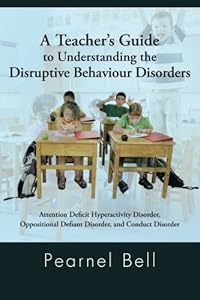
Teachers, family, friends and well-wishers gathered in Room 21, UWI, Western Campus on Friday, August 23, 2013 for the launch of Dr.Pearnel Bell’s book, “A Teacher’s Guide to Understanding the Disruptive Behaviour Disorders – Attention Deficit Hyperactivity Disorder (ADHD), Oppositional Defiance Disorder (ODD), and Conduct Disorder”. The publication of this book is a testament to Dr. Bell’s determination and dedication. She made time to write in spite of her busy schedule of work as a Clinical Psychologist, Regional Consultant with the Ministry of Health, University Lecturer and Researcher. It is described by Dr. Daniel Eckstein as timely. I wish I’d had the information in this book years ago, and therefore describe it as long overdue. However, the book could not have been written sooner, as it contains up-to-date information, much of the research into these disorders having been carried out in the 21st century.
Joy Crooks


Chairperson for the launch, Joy Crooks, Nurse Administrator of CUMI (Committee for the Upliftment of the Mentally Ill), extended a warm welcome to us and introduced Dr. Luz Longsworth, Director of the University of the West Indies Western Campus, who brought greetings. Dr. Claudette Crawford-Brown, Lecturer in Sociology, Psychology and Social Work in the Faculty of Social Sciences at UWI, and Director of the Child and Adolescent Academy of Jamaica also brought greetings. The need for training and networking of all practitioners in the field of mental health is being addressed by this academy, and Dr. Bell’s book contains important reference material to be used by the academy. Dr. Crawford-Brown taught Dr. Bell, whom she named among the top ten students she has ever taught. Dr. Crawford-Brown is the author of “Children in the Line of Fire”.
There followed a Cultural Item “Gimme Dumpling” entertainingly and confidently performed by a little girl from Montego Bay Infant School.
Kay Osborne giving the Keynote Address

The keynote address was given by Kay Osborne of Kay Osborne and Associates, whom we remember as having taken over the reins at TVJ at a critical time. She had read Dr. Bell’s book from cover to cover and highlighted some salient points. She surmised that it was love that drove Dr. Bell to write this most important book, a great achievement in a country where people love to talk but not act. Many of the problems in Jamaica, including crime and violence, stem from mental health problems. Teachers are not usually aware of contributing to harming a child, and could instead help the child if they knew how.  Even small interventions can be helpful, including encouraging the class to applaud good behavior in a disruptive child. Parents sometimes abandon children with problems to the teacher, but a child can be helped best when teachers, parents, social workers and psychologists work together.
Dr. Bell made her response after an introduction by Mrs. Shona Herron, who claimed that Dr. Bell lives what she teaches, and is a social worker at heart, finding great joy when she is able to diagnose and treat. She is a graduate of UWI, received her doctorate at Nova South Eastern  University and her post-doctoral work was at Walden University. Previously, she was a teacher at St. James High School for many years.

Dr. Bell herself confessed that teaching was her first love. It was in schools that she found that teachers lacked the knowledge of disruptive behavior disorders, and what to do when confronted by them in the classroom.  

Books on sale.
Dr. Bell signing a copy of her book

If you are a teacher, I strongly recommend you to buy this book, or ask your principal to buy it for your school. If you’re not a teacher, please encourage all the teachers you know to get hold of a copy and read it.

Next week: a review of the book.

Thursday, August 15, 2013

Zero Tolerance or Infinite Tolerance?

“A zero tolerance policy imposes automatic punishment for infractions of a stated rule, with the intention of eliminating undesirable conduct.” (Wikipedia). The “broken window theory” claims that if a window is broken and not repaired, more windows will be broken and eventually the building will be broken into. Extrapolating that argument, if minor infractions of rules go unpunished, the perpetrators or people in general will continue to expect to be able to  break other laws and not be punished. Arguments and examples can be put forward supporting and  opposing this theory.
Garbage on Sewell Avenue, Montego Bay

However, in Jamaica, the attitude of infinite tolerance seems to prevail. No action is taken against those who break so many of our laws. Take for example the Anti-Litter Act, passed with much fanfare and education programmes in the 1980’s. There are occasional crackdowns, in relation to posters advertising events, but in general there is total disregard for this law. Our drains and gullies are filled with plastic bottles, Styrofoam boxes and other trash to such an extent that they are blocked when heavy rains come and flooding results. Parish Councils are called on to keep these waterways clean, but you never hear of anyone being penalized for dropping the garbage there in the first place. On Sewell Avenue, in Montego Bay, there are two spots where people dump their garbage in an unsightly pile. Garbage trucks pass by regularly and sanitation workers take it up, but minutes later more is deposited. People, where is your civic pride? Couldn’t somebody at least provide a garbage drum at this location?
Open burning

Very few people seem to be aware that there is a law against open burning – a common practice. It’s hard to detect somebody littering - they drop their garbage and disappear, but it’s easy to see smoke and the evidence of a fire in an urban area. If Parish Councils collected fifty-thousand dollars for every instance of open burning, they would need no other source of income.
Slash and burn farming, Caledonia, Westmoreland

Harder to catch are slash and burn farmers in deep rural areas, and those who cut down trees with the intention of selling them. Police in Westmoreland have expressed their frustration at not being able to catch these thieves.
  Another law which is flouted with impunity is the night noises law. Operators of sound systems are supposed to get police permission before holding a session, but many fail to do so. Their noise continues well beyond the stipulated cut-off time and is replete with ‘forty-shilling-words’ which in a different setting would be grounds for an arrest.
  At one time, it was forbidden to import Pit Bull Terriers, and all imported dogs had to be quarantined for six months, to guard against rabies. Pit Bulls and other dogs were sneaked in, by-passing the quarantine. As far as I know, the law forbidding their importation is still on the books, but now Pit Bulls are one of the commonest breed of dog to be found in Jamaica.     
Even the government breaks its own laws by locking up children in adult prisons, and keeping adult prisoners incarcerated for many months without charging them.
  I hadn’t intended for my blog to be a platform from which to rant, as I prefer to be positive and look for solutions. I asked myself whether I would reproach anybody I saw dropping or burning garbage, and the answer was “No”, (except in the case of our neighbour’s gardener to whom we’ve spoken numerous times). However, I know there are many people who think as I do. I’ve heard them on talk-shows and seen their letters in newspapers. By continuing to talk and write, we must make it known that we are the majority, we disapprove of indiscipline and we shouldn’t let ourselves be bullied. We can also lend our support to organizations such as Jamaicans for Justice, and Jamaica Environment Trust, by thanking them and encouraging them to continue to speak out on our behalf.


Tuesday, August 6, 2013

Dangers of Smoke and Smoking


 I fully endorse the recently passed law banning smoking in public places in Jamaica, and the education campaign to support it. This is a health issue, not only for those who smoke, but also for those who breathe in second-hand smoke.

Equally unhealthy, and perhaps even more so, is the smoke produced by open burning of garbage and garden waste. Very few people, including the police, seem to know that this also is against the law and that there is a $50,000.00 fine for offenders. If they know it’s against the law, they also know that the chance of being convicted and fined is almost zero. In Jamaica, it is a common cultural practice instilled in children from an early age. They are exhorted to “Clean up the yard and burn the trash.” Those who indulge in this practice seem to be in blissful ignorance of the dangers of breathing in the smoke.
This practice of open burning isn’t limited to individuals, but is also carried on by organizations and companies. After bushing the area around the sewage ponds in Montego Bay, workers employed to the National Water Commission burn the trash. More serious, I observed open burning of garbage, which probably contains plastics, at the Sangster International Airport. Their incinerator looks like a derelict heap of rusted metal.
JET's Poster

The following information about the dangers of open burning were sent to me by Diana McCaulay of the Jamaica Environment Trust (JET) 11 Waterloo Road, Kingston 10, Jamaica; Phone: (876) 960-3693

WHAT ARE THE POLLUTANTS  AND WHERE  ARE THEY PRODUCED?
Depending on what is burned: soot and other particulate matter, carbon monoxide, methane, volatile organic compounds (VOCs) such as benzene, semi-volatile organic compounds (SVOCs) including poly-cyclic aromatic hydrocarbons (PAHs), carbonyls, lead, mercury, polychlorinated biphenyls (PCBs) and polychlorinated dibenzofurans (PCDDs/Fs). Many of these substances are known carcinogens.

WHY IS OPEN BURNING HARMFUL?
Open burning emissions are released at or near ground levels where people live and work, instead of through tall stacks which aid dispersion. Open fires can affect large areas and persist for a long time.
Technologies to clean up emissions cannot be used for open burning.
Burning after clearing a plot of land

SURELY THIS DOES NOT APPLY TO ORGANIC MATERIAL LIKE CROPS AND
GARDEN CUTTINGS?
It does. Specifically, biomass fires typically emit 10 VOCs, 12 SVOCs, 15 Carbonyls, and 2 PCDDs/Fs.

WHAT ARE THE HEALTH IMPACTS OF OPEN BURNING?
Increased infant mortality, low birth weight of babies, onset of childhood asthma, coughs, wheezing, chest tightness, shortness of breath, burning in eyes nose and throat, dizziness, weakness, confusion, nausea, disorientation, exposure to known carcinogens. While the seriousness of these depends on how close people are to fires, how long fires persist and the number of fires people are exposed to open burning increases risk of death among the general population, particularly the elderly, children, and those with preexisting respiratory and cardiac illnesses.

I am sure that some of the increase in the incidence of asthma, sinusitis and lung cancer can be attributed to open burning as well as to the smoking of tobacco.

We should all stop open burning – the unenclosed combustion of materials, and the burning of waste of all types.


WHAT SHOULD WE DO INSTEAD?
·         Reduce waste,
·         recycle
o        especially plastic bottles. Let’s put a cess on all plastic bottles. If you can afford to buy something in a plastic bottle, you can afford Ja$5.00 at time of purchase and get it back later. If you don’t want to return the plastic bottle, someone else will.
o   composting kitchen and garden waste. This doesn’t have to be high tech. Some fancy bins are sold for composting, but even in a small yard, you can fence off, or mark off an area, or dig a hole where you deposit kitchen waste, and cover it with dead leaves or grass clippings. Add layers of kitchen waste and garden trash. You may need to water (with used water!) it in the dry season. Nature will do the rest. You can turn the pile after about 3 months and start a new one. The speed of breakdown of compost in Jamaica never ceases to amaze me. You can mix the resulting compost with soil for growing plants.
This banana had its roots in a compost heap
·         as a last resort bury non hazardous waste far away from water sources.


Thursday, August 1, 2013

Emancipation through Reading

On August 1, 2013, Jamaica celebrates a hundred and seventy five years since the royal decree proclaiming all slaves to be free people. However, the effects of slavery on the psyche of the nation are felt even to this day. Marcus Garvey was acutely aware of this. He challenged people to:
“Emancipate yourself from mental slavery, none but ourselves can free our mind.” As he also recommended that reading and writing are the instruments to achieve this, all efforts to encourage children to read and write will in turn contribute to emancipation.
 One such effort is the highly successful Summer Arts Workshop, part of the Granville Reading and Art Programme. It is now in its 3rd year, thanks to the dedication, energy and creativity of its director, Natalie Bennett and her hard working assistants.
Children following while a story is read
What is the Summer Arts Workshop? In Natalie’s words,
“The idea of the programme is to designate time in the summer months, and to give
children unmediated access to books where they can read what they like, be read to, practice various reading and thinking skills, and create works of art that they can use to create and write their own stories.
“The focus is on providing a nurturing space where children can develop a love of reading, where reading becomes a habit that they are happy to feed, and which can be fed without them having to leave their community to go downtown Montego Bay, and whether or not they are in school.
Parents can be drawn into the reading experience through a variety of strategies, whether sending home books and asking them to read with their children, or having them volunteer in the day program." 
Natalie Bennett

The importance of involving parents in children’s education is well documented, but how to get them involved is a well kept secret, which Natalie seems to have unearthed. This was her entry on the programme’s facebook page on July 24:
The highlight was one parent who has two sons in the program, and who cut me off in the middle of my introduction:
"Miss, I don't cut you, but I don't know what unnu doing up there, but these boys love to read all of a sudden. They used to hate reading. Hate it like poison. Now! They cannot wait to go to the program in the morning. You should see them when they come home with their books. Miss, I love that program. I would like to make a contribution towards lunch, or to volunteer -- anything."
Getting parents so enthusiastic is such a ground-breaking achievement, I had to ask Natalie how she did it. This is what she said:
“How I did it? I picked up the phone. Seriously. I dialed their numbers, asked for them, joked with them, encouraged them to continue (or to cease and desist from some unproductive behaviours), and told them I looked forward to seeing them again. It will take more than one phone call, but it's what I feel needed to be done. I think we really underestimate how disempowered the parents feel, and the profound sense of shame they experience when their children are not doing well, they don't know what to ask, and don't even always understand what they are being told.
I think they were all caught off-guard because I didn't call them to tell them their kids were acting the fool. Instead, I called them to thank them for sending their children to the program, to find out what their children's experiences were saying about the program, and to remind them of our expectations of how parents would participate and support the work.

When you tell people what you expect of them, help them to reach those expectations, and give them some options about how they can do it, mostly, they will respond. At least, that's what I believe and that's what I practice until I have evidence contrary to such.”
Shelani reading 'Bolo the Monkey'

I first visited the Granville Reading and Art Programme in July 2012, when I read from Delroy in the Marog Kingdom. I returned today with Bolo the Monkey, by Jonathan Burke. My nine-year-old friend, Shelani, came with me to read. She has a strong voice and reads with expression. Tanya Batson-Savage, publisher of the book had visited the previous week and donated copies, which the children could follow during the reading.
Compared with my visit last year, I noticed that the children settled more quickly, with an air of expectation that a story would be worth listening to, and they were more attentive. There was also something intangible in the atmosphere, which I can only describe as happiness.
Once again I congratulate Natalie Bennett, Director, and Jacqueline Strong-Rhoden, Co-ordinator, and all the volunteers for giving their time and energies to a programme which will continue to produce positive results.
If you would like to know more about the Granville Reading and Art Programme, you can visit their facebook page. Better still, visit the Granville Community Centre on Exhibition Day, August 16, when art work will be on display.


Tuesday, July 23, 2013

Mikhail Johnson's Debut Piano Recital

Mikhail practising for the concert
Lovers of Classical Piano Music, if you weren’t in Mountambrin Theatre Gallery on Sunday, July 21, in the afternoon, you missed a treat, when Dr. Russell Gruhlke, Lesbert Lee and Friends presented Mikhail Johnson’s Official Debut Piano Recital, with works by Bach, Haydn and Rachmaninov.


The Programme
Of his choice of music, Mikhail said
“The first half of the programme commemorates the atmosphere of the Mountambrin Property… known for its serene environs.” (that includes the beautiful gardens adorned by Lesbert Lee's provocative sculptures, alongside natural habitats.) The acoustics of the Theatre Gallery enhance any musical performance there.


Mountambrin Gardens and Sculptures
Mikhail chose
Bach’s Partita No. 1 in B-flat Major and                                        

Haydn’s Sonata No.31 in A-flat major, XVI: 46 “Divertimento”
     Allegro Moderato
     Adagio
     Finale: Presto

The second half of the programme he dedicated to “the myriad of violent paintings dispersed throughout the gallery done the gracious host of this artist’s paradise, Dr. Russell Gruhlke.” Mikhail commemorated these graphic scenes by playing music by Sergei Rachmaninov:

Morceaux de Fantaisie Op. 3
- Elegie
- Prelude
- Melodie
- Polichinelle
- Serenade

Prelude in B minor Op 32 No. 10

Prelude in G- sharp minor Op. 32 No. 12

Mikhail’s interpretation of the works did indeed fit the mood displayed in the art works on the walls, and stirred the emotions of the listeners.


One of Dr. Russell Gruhlke's paintings

The theatre with Bunny Rose and Sharon Martini at a previous concert


About Mikhail

Mikhail, one of Jamaica’s promising young pianists, was born and raised in Montego Bay. While attending Herbert Morrison High School, as a member of the school band, he won numerous gold medals and national trophies in the Jamaica Cultural Development Commission’s Festival of the Performing Arts. He also earned himself the second highest score in the island for the CSEC Music Examination.

He graduated from Northern Caribbean University (NCU) with a B.Sc. in biological science and a minor in music. In June 2009, he was the winner of the Jamaica symphony Orchestra Concerto Competition for Young Musicians Senior Division, and the piano section of the Jamaica Music Teachers’ Association Music Competition in November of the same year. He studied classical piano with Kimberly Cann, Marilyn Anderson, Orrett Rhoden and Edison Valencia.

As an active and promising composer, he has received commissions from the NCU Music Department and other organizations. In 2008, his patriotic Anthem of Independence for mixed choir and orchestra was premiered by the NCU Chamber Choir.

Thank you, Mikhail, for your superb performance. Wishing you all the best in your future endeavours.


Wednesday, July 17, 2013

The Value of Summer Reading

   Having taken a break from blogging to concentrate on my work-in-progress, (now out of the way, entered in the Jamaica Cultural Development Commission’s Creative Writing Contest), many bloggable topics are crowding into my brain. One which has grabbed me with great urgency is Summer Reading. We are well into the summer holidays, a time when children can gain an academic advantage simply by immersing themselves in story books. One a week would be a good number for them to read. (See my post on Summer Reading - Some Surprising Findings.) Simply put, children who read for pleasure during the summer do better in school the following year than those who don’t.

   A challenge for many parents is to find suitable books which children will enjoy. The easiest option is to fall back on the books which they read as children - Enid Blyton, Bobbsey Twins, Nancy Drew and Hardy Boys. But what is the effect on Jamaican children of reading nothing but ‘foreign books’? Diane Browne has written extensively on the importance to children of reading about characters like themselves in books. In October 2012, she wrote "Books allow them (young people) to work through their fears, their sources of joy, their experiences, to try on various selves. It would seem a good thing if these selves could be related to their own lives.” On June 17, 2013, she revisited this theme in "Making the case for children's literature - the Doctor Bird Series: Part 3."


    Books about Jamaican children by Jamaican authors are available. In my post on October 18, 2012 ‘Books by Jamaican Authors for children aged 8 - 14’ I listed forty-three books for that age-group. In addition, there are many books by other Caribbean authors for that age group.
Another challenge is to find these books in the bookshops, except for the Sand Pebble Series, available in Sangsters. The ‘foreign book syndrome’ is a system of positive feedback. Foreign books are displayed, therefore sell, therefore the ones which are most stocked. They are also cheaper than Jamaican books, because of their mass-production. The parents’ argument is that they can get two foreign books for the price of one Jamaican. What do they do with these books after their children have read them? Usually, they give them away. I would therefore encourage parents to form book clubs for their children. If each child in a group of three were to buy two Jamaican books, for example from the Sand Pebbles Series, when the children have finished reading one of the books, they can swap.

I will soon prepare a list of books for younger readers for them to read or for someone to read aloud to them. One such book, recently published is “Bolo the Monkey” by Jonathan Burke, published by Blue Moon. I had hoped to have a copy to review, but unfortunately I can’t get it in Montego Bay. This book, like many others is a victim of the ‘foreign book syndrome’.

While I’m currently emphasizing Summer Reading, I’m also questioning how much reading happens in term time in our Primary Schools, especially in the lower grades. A blog I like to read is “A Year of Reading - Two Teachers Who Read. A lot”. Not only do Franki and Mary Lee read a lot, they also write a lot of worthwhile information.

I make no apologies for quoting from Franki’s most recent post. The highlighting is mine.

“I've spent lots of time this summer catching up on series books that I think my new third graders will be reading when school starts next month. Catching up on these transitional books is key to supporting their reading development. I'm also looking for stand-alone books that help readers understand the power of story and that help them build conversation to understand character, see the world differently, and laugh and learn together. 3rd grade is a challenging one when it comes to book choice because it is tempting to choose books that are just beyond what kids are ready for so they don't quite understand them. They are 8 year-olds so their life experiences are not quite ready for the depth of some middle grade novels. And I am a firm believer that if we give kids great books too early, we take away the joy of experiencing an amazing book later, when they are able to fully enjoy and love it. But, I also know that third graders are brilliant people who have lots to say and need books to help them think through life. It's just that finding books that match the stage of life is not as easy as it appears.”

I would love to hear from a Grade 3 teacher who can say the same as Franki. I'm sure she has a much more difficult time accessing books than Franki does.

If you come across a child who appears bored with the summer holidays, suggest to him/her that he/she could read a book. Better still, look in your book collection for titles you could lend to him/her.

Tuesday, January 22, 2013

Taking a break from blogging to concentrate on WIP

   My New Year's Resolution was to keep all my plates spinning, but if I kept that resolution, I would not be able to meet my goal of completing my work-in-progress, the sequel to Delroy and the Marog Princess, by the end of June. Hence my blog is the first plate to drop. I don't plan to write any more posts until July. However, if something relevant to my blog should grab my attention, I would consider it.
   I still make my weekly visit to Chetwood, helping eight grade two students with reading. I'm delighted that Mrs. Amoy Virgo is also volunteering her time to assist them, so they now have two days a week. If anybody else reading this would like to volunteer, please let me know. As with all teaching, a certain amount of time has to be spent on preparation. All children need individual attention when learning to read. Because many parents can't help them, more volunteers are needed. 
   I will keep you informed of my activities via Facebook and Twitter.