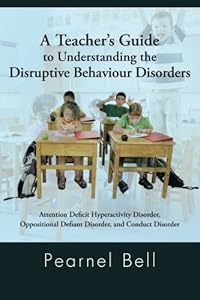
The information in this book made a profound impression on
me. Since reading it, certain ideas have played over in my mind. One
of my passions is that all children should learn to read. I volunteered at
Chetwood Memorial Primary School, one afternoon a week to help Grade 2 children
who had not yet learnt to read. Mrs. Amoy Virgo also helped the same children on
another afternoon. A student from Montego Bay Community College helped in the
2011-12 school year. He motivated the students, and they liked him. I had hoped
to involve more volunteers, especially students at the tertiary level, but this
was not to be. Perhaps there was a reason. I had concentrated on the teaching
of reading instead of focusing on the children.
Mrs. Virgo and I were faced with a real problem when it came
to discipline. Several of the children couldn’t concentrate for more than about
five minutes – they crawled around under the desk to pick up things they’d
dropped on the floor, they liked to slide on the ceramic tiles in the library,
they were distracted by every little thing and made frequent requests to go to
the bathroom. It is possible that they had a disruptive behaviour disorder. The
better behaved children in the groups were distracted by them. I tried to use positive
reinforcement, but I have to admit that from time to time, I raised my voice
and glared at them. One student may have suffered from Oppositional Defiance
Disorder, as he point-blank refused to do as he was told.
Dr. Bell’s book indicates to me that I should have taken an
entirely different approach. Ideally, the children would have been referred to
a psychologist, who would work with teachers, parents and social workers to
modify the children’s behaviour. Given the large numbers of children in relation
to the numbers of psychologists and social workers, the second-best is for the
teachers (including myself) to have a better understanding of the disorders,
and reward desirable behavior instead of punishing undesirable behavior.
The book does not prescribe a simple remedy to the problems confronting
teachers when they have children with disruptive behaviour disorders in their
classes. Rather, it identifies the direction in which teachers should look to
find their own solutions to these problems. Dr. Bell begins by defining the
disorders and discusses teachers’ knowledge and perceptions of, and experience and
attitudes towards them. She recommends that teachers read more about these
behaviour disorders and provides and extensive list of references.
In her second chapter, she draws on her own research into
Jamaican teachers’ knowledge, experience and attitudes. When confronted with a
child with a disruptive behaviour disorder, many teachers will reprimand, shout,
give the child a cold stare, or even beat the child. When these strategies are
ineffective, teachers are overcome with feelings of frustration. They may send that child to the Guidance
Counselor, or Principal, or send the child out of the class. Not only are these
strategies ineffective, they have actually been shown to make matters worse. In
her third chapter, she discusses in a balanced way the use of medication as a
treatment option.
 |
| Dr. Pearnel Bell |
Chapter 4: “Strategies Teachers Can Use to Deal with ADHD,
ODD and CD Students” is probably the one
which many teachers and administrators will find the most helpful. The
usefulness of the ecosystem approach, involving psychologists, teachers, social
workers and parents is explained. The shortage of trained personnel in Jamaica
hinders widespread use of this strategy. However, much can be done by
administrators to train teachers and encourage teamwork among teachers and
parents. The importance of teachers giving positive reinforcement for good
behaviour cannot be overemphasized. “Experts are unanimous in supporting the use
of praise and positive reinforcement as a powerful tool for reducing problem
behaviour and improving academic performance.”
The final chapter “Self Care: Stress Management for Life
Management” is an often overlooked aspect of training for teachers. Throughout
the book, Dr. Bell makes reference to how disruptive students make teachers
feel, and therefore react, and the effect of the teachers’ reaction on these
students. Chapter 5 includes stress reduction tips and emphasizes the
importance of self-reflection and self-monitoring.
I strongly recommend this book to all teachers and school
administrators. A copy should be available in every school and teachers’
training college. Since it is based on workshop content, it could also be the
basis for workshops within a school or college. Chapter 4 ends with questions
for discussion among workshop participants. I regret that it was not possible
for Dr. Bell to include samples of responses to these questions. We
look forward to further publications of this nature by Dr. Bell.
There is evidence that children with untreated disruptive behaviour disorders often find themselves on the wrong side of the law. What if all of these children could be treated, or at least given positive reinforcement for desirable behaviour by their teachers? Perhaps we would see a reduction in the crime rate, hence a reduction in the cost of crime. The money saved could be used to employ more psychiatrists and social workers.
There is evidence that children with untreated disruptive behaviour disorders often find themselves on the wrong side of the law. What if all of these children could be treated, or at least given positive reinforcement for desirable behaviour by their teachers? Perhaps we would see a reduction in the crime rate, hence a reduction in the cost of crime. The money saved could be used to employ more psychiatrists and social workers.


