Thursday, January 23, 2014

Go Green with Composting

A bucketful of kitchen waste
My objective in writing this blog post is to encourage people in Jamaica, who are not already composting kitchen and garden waste to start, and for those who are already doing so to encourage others.
When a leaf drops from a tree in a forest, it slowly decomposes releasing nutrients that are re-used by the tree. One aim of composting is to allow waste organic matter to break down in the same way, naturally, producing humus which is a good soil conditioner. In the end, organic matter breaks down to carbon dioxide, water and minerals. A second aim of composting is to get rid of unwanted vegetable matter, including kitchen and
Kitchen waste covered with dry leaves
garden waste, at source, without burning it or having it taken away by a truck. It seems to me to be an unnecessary use of scarce resources in Jamaica to pay people to carry, in a gas-guzzling truck, material which in 6 months of composting would be reduced to one hundredth of its original weight and volume.
Much has been written about composting, explaining methods which can be used if you live in an apartment or if you have a small or a big yard. My question is, why don’t people compost more? Some people think it is a complicated process, but you do not need a big yard space, or a purpose built unit. You can collect the kitchen waste in a
Finished compost  (ackee seeds need to be taken out!)
covered container such as a bucket until it is convenient to take it to the compost heap. This can be as simple as a bucket-full of kitchen waste covered over with dry leaves or grass clippings. The next bucket-full is put on top of the dry leaves, and more leaves are put on top of that. After about 3 months, that pile can be left to decompose and a new pile started. If you turn the old pile, so that the fresher material is at the bottom and the more decomposed material is on top, it will break down more quickly. After about 6 months, all that is left is the humus, which you can mix with soil for your potted plants or in your garden beds.   
     When the same material ends up in a landfill or a garbage dump, it is mixed up with all sorts of stuff such as metals, glass and plastics, which do not break down, so it is of no use to anybody.
My preferred method is to have a countersunk heap, in a hole about 1 foot deep by 3 ft square, which can be covered with soil when it is finished.  Given the rocky terrain in my yard, that is not an option.
If you don't have a compost heap, try it nuh!


Saturday, January 11, 2014

Fathers' Influence on Boys' Reading

In addition to literacy being the foundation of all learning, reading for pleasure has been shown to improve performance at school in all subjects, including mathematics. It is therefore of the utmost importance that boys not only learn to read but enjoy reading. Fathers have an important part to play in boys achieving this goal.
Most fathers would like to see their sons do well in school, but many are in the dark about of the best way of helping them. Men usually leave matters to do with school and reading up to the mothers, only getting involved when things are going wrong, when they tend to take a heavy-handed approach. Unfortunately, when it comes to reading, that can have the opposite of the intended effect.
     Volumes have been written about methods of teaching children to read, and hundreds of hours have been spent researching how children learn, but how a person actually learns to read is still a mystery. Methods go in and out of fashion, and one set of research contradicts the findings of another. But one observation remains constant— a child learns best in an atmosphere free of stress, in the company of a supportive and caring individual. Badgering and harassing a child, or otherwise communicating anxiety will result in the child having an adverse emotional attitude towards learning.
     Fathers are quite likely unaware of the strong influence they have on their sons’ reading. Boys look up to their fathers, whether those fathers live with them, or see them at frequent or infrequent intervals. Boys want to be like them. If fathers are seen to be reading for pleasure, and if fathers read stories to their young sons, these boys will want to read, too. If not, they won’t see reading as important. Fathers who scorn the activity of reading, and express sentiments such as that reading is a waste of time will certainly make boys lose interest.
     All negative reactions to boys’ attempts at reading, such as shouting, expressing disappointment, or walking away, are likely to have damaging effects.  One boy I was attempting to help with reading told me that his father beat him because he couldn’t read. No wonder he couldn’t read! Instead of seeing reading as a pleasurable experience, any attempts he made would be accompanied by feelings of anxiety and fear. A father who praises all his son’s attempts at reading will be rewarded by further efforts by the boy.
     Even if a father himself cannot read, or is a poor reader, he can still influence his son in the right direction, by expressing regret about his own lack of competency and encouraging his son to read to him. Important also is a father’s attendance at PTA meetings, where they can hear how other parents are helping their children. At one such meeting about literacy, at Chetwood Memorial Primary School, a father told how he likes to play football with his son. He also likes to read, so they read before playing football. Even if the son sees football as a reward for reading, it will still have a positive effect.
     At the time of that meeting, I was trying to help eight students with their reading. The parents of all of them had been specially invited to that meeting. Only one parent came - a mother. No amount of money, or input from institutions or organizations, could achieve such a positive result in promoting literacy in boys as fathers’ encouragement and affirmation.
     My post on Boys' Reading makes some other suggestions about why boys don't like to read and what can be done about  it. At the time of writing, I hadn't considered fathers' influence at all, but it may be the one missing link in all this discussion. 


Friday, January 3, 2014

Reading at Buckingham Primary School


On December 9, 2013,  I went to make a presentation of "Delroy in the Marog Kingdom" to Buckingham Primary School, located on the road from Montego Bay to Hopeton through Granville, Camrose and Kempshot. A book-reading was arranged by Tamika Williams to follow my visit to her award-winning Ahhh Ras Natanga Garden and Gallery. The book was donated by Donna Delgado as part of 1 Love Medusa Reunion's activities in July 2012, when members of the group bought copies of my book to be donated either to the school they attended, or to a school of my choosing. I read to grades 4 to 6. As usual, I carried a toy frog and a pot which grabbed the students' attention from the beginning,  They remained focused until the end. I hope the excerpts I read were enough to whet their appetites so they will read the book for themselves.
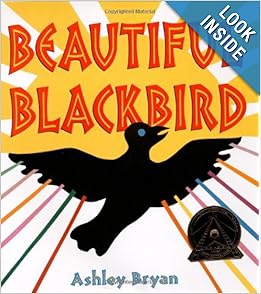
      I then went to grades 1 and 2 to read "Beautiful Blackbird" by Ashley Bryan. When I read this book to grade 1 classes in another school, the children lost interest halfway through, perhaps because I had no props. This time, inspired by Mara Menzies storytelling, I tried some of her techniques. Of course, I had to read rather than tell the story, but my sister, here on holiday, held the book for me. My arms were free to flap like birds' wings and the children flapped theirs also, like the birds who flew in from all over with a flip-flop-flapping of their wings. For the Show Claws Slide, the children followed instructions to
"Tip tap toe to the left, spin around,
Tip tap toe to the right, stroke the ground."
     There were opportunities throughout the story to involve the children in actions and song. The response was very different this time, as the children were engaged and listening throughout the whole story, so much so that they wanted me to read it again. My next challenge is to choose popular tunes for the songs, so children can join in.
     "Beautiful Blackbird" is adapted from a tale from the Ila speaking peoples from Zambia.  Ashley Bryan (born July 13, 1923) is an African-American writer and illustrator of children's books. Most of his subjects are from the African American experience. He was U.S. nominee for the Hans Christian Andersen Award in 2006 and he won the Laura Ingalls Wilder Award for his contribution to American children's literature in 2009. 
       If you are interested in donating a copy of "Delroy in the Marog Kingdom" or "Beautiful Blackbird" or any other book to your alma mater, please message me at helen.b.williams@facebook.com
                                                                                                                                               

Presenting my book to Mrs. Allen, Grade 6 Teacher


Thursday, December 12, 2013

Ahhh Ras Natango Garden and Gallery,

View of garden and house (partially hidden)
I recently visited Ahhh Ras Natango Garden and Gallery, the brainchild of Tamika and Ian Williams, who on Monday were declared  the TripAdvisor 2013 Winner, and were awarded a Certificate of Excellence. This premier attraction is in Camrose, on the right hand side of the road running from Montego Bay, through Granville to Kempshot. A steep driveway leads to the house and the amazing garden, built into a hillside where you would think any kind of cultivation would be washed away. However with skillful use of terracing, suitable habitats for a wide variety of tropical and temperate plants have been created, alongside walkways which allow the visitor to admire them. Among the plants grown for their flowers and foliage are Iris, Coleus, Nasturtium, Aquilegia, Roses, Orchids, Crotons, Kalanchoe – Mother of Thousands (which if you’re not careful will take over your whole garden) Anthuriums, Bromedliads, Impatiens, Red Ginger, Cockscomb, Moses-in-a-Basket (Rhoeo) and many more. You can see Tamika’s beautiful photos of her flowers on Ahhh’s facebook page.
Beside the walkways are whimsical touches such as unusual carvings of animals including sharks and snakes, a miniature village, Jurassic Park, and the Zen Garden.
The Village

The Waterfall
At the far end is a waterfall, not less attractive for being man-made. You can relax in comfortable seats near the waterfall, soothed by the gentle sound of water, and take in the breathtaking vista of Montego Bay and the Caribbean Sea.  Stately cedars and other native trees enhance the view.
View of Montego Bay
I must also mention the compost heap, in which garden waste breaks down to form a natural soil-conditioner. I was heartened to hear that no garden waste is burnt here, and neighbours are encouraged to do likewise. 
The Art Gallery and Gift Shop occupy rooms on the ground floor of the house. The Gift Shop was placed 1st among shops of this kind in Jamaica, mainly because all the merchandise is made locally and no pressure is put on visitors to buy. The Art Gallery is filled with paintings of flowers, people and scenery, by Ian and his son Ayale, who show great versatility.
     The beauty of the garden is complemented by the friendliness and courteousness of the staff working there. My thanks to Tensie, who showed us around the garden, and to Marcia who came with us to Buckingham Primary School, where I was to do a book reading.

Tuesday, November 26, 2013

Old-time Storytelling at Montego Bay Community College

Flyer for Ananse Sound Splash 2013
   

Amina Blackwood Meeks with her peas soup
An old-time Storytelling evening, mysteriously called “Gi Laugh fi Peas Soup”, was presented in the Montego Bay Community College Lecture Theatre on Friday, November 22nd, by the MBCC Performing Arts Society in association with Ntukuma (The Storytelling Foundation of Jamaica) and the Council of Community Colleges of Jamaica. It was the 8th leg of Anansi Sound Splash 2013* - an Eight Legged Storytelling Conference and Festival.
     After opening remarks by the energetic Philip Clarke, Amina Blackwood Meeks got the evening off to a rollicking start with us all skipping around to the born-in-the-month song. The MBCC Band gave a lively rendition of “Evening Time”, Tashelle O’Connor entertained us with Rolling Calf, and the drama group gave us an Ananse story.
     I read an excerpt from “Flash”, my short story which won a silver medal in the JCDC Creative Writing Contest 2010. I picked out a quarter of it, which I hope gave the gist of the story about a boy inspired by Usain Bolt. If you want to read the whole story, you can download it free from Smashwords 
Marline Stephenson Daley
     With Marline Stephenson Dalley’s side-splitting jokes, we had our laugh and were rewarded with peas soup, made by Andrea Nelson. After Eric Daley recited Easton Lee’s poem “My Mother”, Amina took the stage again with “Her Story”, challenging the audience with questions about customs of bygone days. She also plied us with riddles: “Riddle me dis, riddle me dat, guess this riddle and perhaps not”, or “parrats snap”, as she heard it, as a child. I was reminded of hearing the same phrase on the radio, in an advertisement for Grace products, when I first came to Jamaica. I wondered at the time what a “parapsnat” was! Amina rewarded those who guessed riddles correctly with pens from one of the sponsors.           
     Then she introduced the guest of the evening, Kenyan storyteller Mara Menzies. Mara maintains that stories should not be read but be told, eye to eye, mind to mind and heart to heart. She supported her theory with demonstrations of how to tell stories, with energy, with mime and movement, with variation in facial expression, and in pitch and rhythm of her voice. In her first story, a noisy bird, a banana tree and a turtle met their demise, while the little bug was able to get a good night’s sleep. Her second story, about how the cat came to live in houses, was applauded by all the women in the audience.
Mara telling a story
The remainder of the programme consisted of more performances by the band, another poem Eric Daley, two pieces by the Performing Arts Society, and “Peep Inna Mi Pot” by the MBCC Choir.
This most enjoyable evening demonstrated that we don’t have to go to technology for entertainment. A similar activity could take place in our own homes and communities. Thanks to Philip Clarke for organizing the event.
In attendance were Dr. Angela Samuels Harris, Principal of MBCC with her husband, Glendon Harris, Mayor of Montego Bay, Dr. Maureen Nelson, Vice-Principal of the college and Mrs. Barbara Nelson, recently inducted as an Honorary Fellow of the college, for her years of service to MBCC.

Anansi Sound Splash 2013 was endorsed by JCDC and The Institute of Jamaica. Supporters included Scotiabank, First Global Bank, RBC, British High Commission, The Gleaner and Irie FM. Mara Menzies was sponsored by the British Council. 
Mara and Amina
A member of the band
The MBCC Choir


Sunday, November 17, 2013

Practical Reference Books for Writers - Part 1

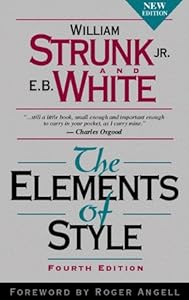
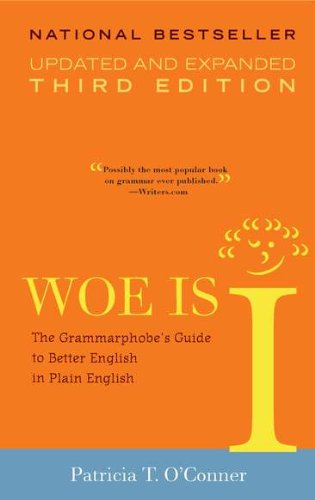
All of us as writers try to find our voice, but at times this conflicts with what we learned, – and taught – in those dreaded English Grammar classes. I have found 3 books particularly helpful in releasing me from that straitjacket, and recommend them to writers of essays, short stories and novels.

It is easy to look things up in the timeless “The Elementsof Style” by William Strunk and E.B. White.  The first chapter, on ‘Elementary Rules of Usage’ includes reminders of when to use the singular verb form, and how to avoid dangling modifiers. Chapter 4, ‘Words and Expressions Commonly Misused’ includes examples such as ‘state’ which should be used in the sense of “expressing fully or clearly”, as in “He refused to state his objections”, and not simply to make a change from ‘say’ or ‘remark’. The fifth and final chapter, ‘An Approach to Style’ ends with the observation that “Style takes its final shape more from attitudes of mind than from principles of composition.” All of us who write can find gems in this handy reference book.
It’s also available in a Kindle Edition.


“The laws of grammar come and go,” says Patricia T. O’Conner in her book “Woe is I - the Grammarphobe’s Guide to Better English in PlainEnglish”, another favourite of mine. In a readable style, she takes a logical approach to the rules of grammar. She advises us, in chapter 9, which laws of grammar should be followed and which are passĂ©, for example splitting the infinitive. I was trained never to put another word between ‘to’ and its related verb. Then came “To boldly go where no one had gone before”. Nothing wrong with that, says O’Conner – be guided more by the sound of your sentence than following a rule.

One would not expect a book on punctuation to be entertaining, but I enjoyed “Eats, Shoots and Leaves” by Lynne Truss. In her enlightening chapter “That’ll Do, Comma”, she quotes Sir Ernest Gowers, “The use of commas cannot be learned by rule”. 
She also gives examples of the effect of changing the position of the comma. “Go, get him surgeons”, and “Go get him, surgeons” have different meanings; as do “Verily I say unto you, This day thou shalt be with me in Paradise”, and “Verily I say unto you this day, Thou shalt be with me in Paradise”.


A final note to writers, it’s easy to be so taken up with rules of grammar that creativity is stifled. To prevent that happening, when writing your first draft, turn off your inner editor and let your writing flow. After writing that, you can turn the inner editor back on. Then you can battle out with a critique group partner, or an editor, your interpretation of rules of grammar.

Tuesday, November 12, 2013

JCDC Creative Writing Contest Awards Ceremony 2013

"Gold Anthology" Writers
 This year the Jamaica Cultural Development Commission celebrated 50 years of the Creative Writing Contest. To commemorate this milestone, they have published a “Gold Anthology” containing Gold-Medal-Winning short stories from 1999-2006.  The writers are Rudolph Wallace, Verone Johnston, Michael Reckford, Claudette Beckford-Brady, A-Dziko Simba, Nadine Tomlinson, Charmaine Morris, Rhonda Harrison, Carroll Edwards and Dionne Jackson-Miller.
The Gold Anthology was unveiled at the JCDC Creative Writing Contest Awards Ceremony 2013, held in the Grand Caribbean Suite at the Knutsford Court Hotel, on Tuesday, November 5. There to witness the unveiling were this year’s awardees and their families and friends, who were entertained by a programme of exceptional quality. Mr. Roy Rayon took us back through the years with his Suite of Festival Songs and had us singing along. 
Dr. Erna Brodber
Dr. Erna Brodber, the guest speaker, explained to us how she, as a sociologist, worked to collect the oral histories and the stories of elders in rural communities of Jamaica. She sensed that the way she had to present her findings failed to capture the stories she heard. The novel, she realized, was a better medium.  Hence her four novels: Jane and Louisa Will Soon Come Home (1980), Myal (1988), Louisiana (1994) and The Rainmaker's Mistake (2007). She won the Caribbean and Canadian regional Commonwealth Writers' Prize in 1989 for Myal. In 1999 she received the Jamaican Musgrave Gold Award for Literature and Orature. She encouraged us to continue to tell Jamaicans’ stories.

Then followed the presentation of over 50 awards - Certificates of Merit, Bronze, Silver and Gold Medals, Class and Category awards and Overall Awards,  interspersed with poetry readings by Chadwick Foster, Mrs. Gloria Malcolm-Foster and Ms. Ambrozene Simpson, and a attention-grabbing dramatization of a scene from Omaall Wright’s silver-medal-winning play “Belly Woman”.
I was happy to be among the awardees, with a silver medal and Best Intermediate Novelist for “The Last of the Marogs”, sequel to “Delroy and the Marog Princess” (bronze medal, 2011) and Delroy in the Marog Kingdom (published by MacmillanCaribbean 2009).  

The overall winners were:
1st place - Best Overall Writer - Gloria Malcolm-Foster, (Trelawny), for 3 poems (1 gold, 1 silver and 1 merit) and her play “GSAT!!” (Certificate of Merit)
2nd place - Outstanding Writer - Ava-Gay Bennett, Best Intermediate Poet, for her poems “Di Blackberry” (gold) and “Georgie Porgie” (silver). Ava-Gay hails from St. James, so I’m looking forward to meeting her at JCDC events staged in our parish.
3rd place - Special Writer - Ambrozene Simpson, (Kingston & St. Andrew) Best Adult Poet, for her poem “Constant Companion” (gold).
4th place - Choice Writer - Nattalie Gordon, (St. Catherine), Best Junior Poet, for her poem “New Shoes Blues”, (gold).
Nattalie Gordon delighted with her award

5th place - Noteworthy writer - was shared between Chadwick Foster (Trelawny) for his poem “Monster Maid”, (gold)  and Malachi Smith (Kingston & St. Andrew) for his poem “Cotton Piece”.


The work of all awardees is on display in the Jamaica Creative Writing Exhibition Tour 2013, currently at The National Library of Jamaica until November 22. Between then and July 15, the Exhibition will move from parish library to parish library in a clockwise journey starting in Kingston and St. Andrew. I urge anyone who writes to enter the 2014 contest (final date for entries - last Friday in June), and to read work exhibited to get an idea of the standard of the award-winning entries. 

Here are some links to other articles about the Awards Ceremony: