Showing posts with label Ministry of Education. Show all posts

Thursday, April 14, 2016

Learning Disorders – the Struggle is Real Part 2

Mr. Karl Watson
This is the 2nd of 3 posts I am writing about a Symposium “Learning Disorders – the Struggle is Real” put on by the Association of Future Psychologists, a service club at the Western Campus of the University of the West Indies. Mr. Karl Watson was the final speaker at the symposium, but what he had to say flows logically from Dr. Shaw Salmon’s presentation, the subject of my 1st post. She told us about the children who end up in Grade 7 with poor or non-existent reading abilities. Mr. Watson, who is a Regional Special Needs Coordinator with the Ministry of Education, explained the strategies which will be used to identify and address children’s special needs at the earliest possible time. He was an entertaining speaker, frequently replacing his references to “the government” by “sorry, the previous government”, it being only a week after the general election. I am sure he is happy that the new minister has assured the nation that policies will remain the same. He began his address by pinpointing some of the landmarks in Special Education, and lamenting some attitudes.
      For children with special needs:
  1928 saw the establishment of the Salvation Army School for the Blind, and in
  1938  Rev. F.W. Gilby established the Jamaica Schoolfor the Deaf .
     There was no provision for children with intellectual disabilities until 1956, when the Randolph Lopez School of Hope was established.
      In 1975 Jamaica benefitted from a bi-lateral arrangement with the Netherlands government, through which the following were established:
  • A formal teacher training programme in special education at the Mico Teachers’ College (now Mico University College)
  • The Mico Child Assessment and Research in Education (CARE) Centre for diagnostic and therapeutic services for children across the region.
  • Seven (7) self-contained special education units in primary schools, offering intensive instruction for children with special educational needs
At that time, there was reluctance among primary schools to house the special education units because of the stigma attached to special ed. children. Mr. Watson found, during a feasibility study he conducted 3 years ago, that the fear of stigmatization still exists.  
In developed countries, the pendulum has swung from having special schools to including children with special needs having their needs addressed in mainstream schooling. The debate continues about whether this is the best approach. In Jamaica, in 2004, a Task Force on Educational Reform presented its findings to the Ministry of Education, resulting in the Education System Transformation Programme  (ESTP). Implementation of the recommendations has been ongoing since 2005. Among the major activities of ESTP is the improvement of provisions for Special Education.

To effect these improvements, a National Special Needs Coordinator (Dr. Meredith) was appointed, together with Regional Special Needs Coordinators for each of the 7 regions. Regional Assessment Teams consisting of 2 psychologists and 2 diagnosticians were set up. One of their first activities was to identify children with special needs – 7628 were identified in 302 schools. In response, work has begun to establish 20 additional pull-out classrooms and 2 additional self-contained Special Ed Units. A system of early identification and referral, supported by Regional Assessment Teams has begun. The MOE continues to provide examination accommodation for children sitting national examinations.

Over 3000 teachers and MOE personel  have benefitted from training in several areas including strategies to identify special educational needs; Applied Behaviour Analysis (ABA) for work with children with Autism Spectrum Disorders; Proficiency Pathway: A guide for instruction and intervention at the primary level; and Positive Behaviour Support and restorative discipline.

The Special Education Unit in the MOE cannot operate in isolation and requires the support of other agencies. Aspects of support include    
  • Continued collaboration with the Guidance Counseling Unit of the MoE; and the Child Guidance Clinic of the Ministry of Health.
  • The recently launched diagnostic and therapy clinic for pre-school children at VOUCH, in conjunction with the Jamaica Teachers’ Association (October 2014).
  • Mobilization for the establishment of three diagnostic centres at Sam Sharpe Teachers’ College in St James, Church Teachers’ College in Manchester, and the College of Agriculture Science and Education in Portland. These are scheduled for completion by 2016. 

There will also be more public education for parents with regards to special ed.

The most important step in providing education tailored to suit every individual is the early identification of their needs. Hence the introduction of assessment before grade 1. Based on this assessment each child would be deemed ready, not quite ready or not ready and taught accordingly. At the end of Grade 2, there is a diagnostic test to monitor progress. Towards the end of Grade 4, there will continue to be literacy and numeracy tests. In 2018, GSAT will be replaced by the Primary Exit Profile (PEP). Alternative Secondary Transitional Education Programme (ASTEP) will be replaced by Alternative Pathways for Secondary Education (APSE).
At the launch of APSE

At every level in the education system, efforts will be made to teach children in the way they can learn and for them to use their abilities to the optimum. Quoting from the Nathan Ebanks Foundation Conference on Inclusion “Creating Pathways to Inclusive Education”:
The outcome we desire cannot be accomplished with ‘chalk and talk’; as Aristotle said: ‘Educating the mind, without educating the heart is no education at all’. We need the engagement and involvement of all concerned at every level, since ‘Education is not preparation for life ... education is life itself’ (John Dewey).


Thursday, February 20, 2014

GSAT Ranking and School Size

The Jamaica Gleaner recently published an analysis of 2013 GSAT Scores, ranking schools according to their performance. The analysis revealed that the average performance of students attending Prep Schools exceeded that of Primary Schools. Most of the ensuing discussion focussed on reasons for this disparity. However, after taking part in the Twitter Chat on Feb 18, 2014, I was interested in putting together some data on the differences between rural and urban schools in St. James. I chose four rural, underpopulated schools and three urban schools for my investigation. I took data from Jamaica's Ministry of Education website  and the Gleaner's Survey.  The figures show that there are indeed underpopulated schools, with enrolments far below their capacity. They have enviable pupil teacher ratios, but abysmal performance. Their average GSAT scores are well below the  national average of 258, as shown in the table below. 

Parish: St. James
 School Name               %       Capacity    Current       No of     Pupil       # of           Ave 
                                 attend                     Enrolment  Teachers   Teacher  GSAT      Score      
                                                                                                 Ratio       entrants
Lottery Primary             82         260             53            6              27:1         6            211

Mount Zion Primary       93         150            38            3              19:1         3            161
Mount Horeb 
All Age and Infant          76         200            42            4              14:1         1            163
Salters Hill All Age        90         215            40            3              20:1          4            220
Granville All Age           73         710           385          26            18:1         74            239
Corinaldi Ave Prim        95         875         1,675         52            36:1       265            313
Chetwood 
Memorial Primary         94         585          1,157         33            39:1       191           284

     Of the urban schools, Corinaldi Avenue and Chetwood Memorial Primary are overpopulated, but are performing above the national average. Corinaldi made it into the top 100 schools in the survey, and GSAT's top boy, Mark Brown, attended Chetwood.  What is is about these urban schools which makes them perform so well? Yes, they have good teachers and good principals, but that cannot be the only reason for their success. I contend that it is the parents who make the difference. Parents have choices and the more concerned parents are the first to register their children in what they perceive to be the better schools. Being concerned parents means that they have done the best for their children up to the point of entry to the primary school, with many of these children alreay being able to read. These children perform better, therefore raising the standard of the school even more. 
      The underpopulation of the rural schools occurs not only because of rural-urban drift, but because these particular schools are seen as non-performers. What may have begun as a result of weak leadership, ends with concerned parents removing their children from these schools. With the exodus of better students, the standard of these schools drops even more. I think the facilities could be better used if these schools were turned into basic schools, and the present students sent to the nearest suitable school. Mount Horeb All Age and Infant School is about 4 miles from Cambridge where there are both primary and secondary schools. Based on the numbers, there would only be 4 students per grade to transfer. There is always an outcry when a suggestion is made to close a school, but as far as I can see, these schools are not benefitting the children attending them. 
      One reason Corinaldi is able to do so well is the the classes, although large, are more homogenous in relation to the ability of the students. There is a six-stream entry and, as children are ranked according to ability, teachers can tailor their classes to suit the learning rate of their pupils. In an underpoplulated school, each teacher would have to teach two or more grade levels.
New Building at Chetwood Memorial Primary School
    Chetwood was able to increase its capacity with some funding from the Catholic Church, which enabled it to construct a new building with five classrooms, a library, a computer room and an office for the guidance counsellor. The school also boasts a computer based system of teaching reading, and achieved 95% mastery in the 2013 Grade 4 Literacy Test.
    Children are coming to Chetwod from as far away as Mahfoota and Retirement. Why is a student from Retirement not attending Granville All Age? Here is an example of a school that has got a bad name in the past. For whatever the reason was, there is no justifiction for that now. When I did a bookreading there in 2012, I found the children to be well-behaved and attentive. However, as a good reputation takes a long time to build, the school is still underpopulated.

Granville All Age School
 The schools I chose for this discussion represent opposite extremes. Of course there are many rural schools which are not underpopulated and are performing well; and there are urban schools which are not overpopulated and are not doing so well. Attendance and punctuality  also impact schools' performance. All schools also have their quota of malnourished children, and children with undiagnosed and untreated behavioural and learning disorders. When members of the diaspora are deciding how they can give assistance, the problems may appear to be overwhelming. However, I think that their decisions should be based on available data, rather than on common  misconceptions. I hope this post has helped to dispel some of these.
     Last but not least, I would like to recommend support of the Granville Reading and Art Programme, GRAP, spearheaded by Natalie Bennett. It is making a tremendous difference in the community of Granville.
     

Sunday, January 26, 2014

"Prison" Schools

Given all the furor over Minister Thwaites's presentation in Parliament of the Ministry Paper “A preventative Initiative in Schools to Ameliorate Jamaica’s Crime Problem” January 20, 2014, I decided to read the source document. There is a one-line reference to a JCF study, which identifies certain schools as being the schools the individuals in the study attended. Based on this, the press chose the unfortunate headline “Prison Schools” and a statement of fact was interpreted as a cause and effect relationship, naturally upsetting teachers and students at the named schools.
The Ministry Paper also said 
 “Criminals are not born; they are formed – often by neglect or poor socialization. The major positive environments in the formative process are school, church and/or family.  Every child goes to school at some time. There is no other institution with such potential for positive socialization. As such, law-abiding habits ought to be expressly connected with the school experience.”
And: “Studies show that many who end up committing serious crime were frequently absent from school; exhibited cognitive or social abnormalities; were not assessed or treated adequately; had little or no effective  family/ teacher support and dropped-out/ “graduated” with inadequate or no certification.”
Can we disagree with these statements?
In response, the Ministry of Education plans a special intervention in 56 seriously affected schools (it didn’t say whether any primary schools are included) to
1. Identify troubled, deviant and seriously disadvantaged students
2. Assess and address their situations
3. Prevent drop-outs

 The Ministry of Education gives the following projections:
 The MoE also proposes a system-wide intervention beginning in 2014. It will:
1. Administer a test to determine  the social and emotional state of at-risk students  - first in an early grade and later at an intermediate level, for example Grade 9, in selected schools
2. Complete development of Regional Referral Centres to treat with major dysfunctional tendencies
3. Offer teachers in primary schools training in counselling, parental engagement and primary therapies related to challenged children
4. Request a revision of the courses in Behaviour Management in all teacher training institutions to ensure that they cover the emerging behavioural challenges being displayed by students
5.  Appoint Social Workers in Education Regions who will network with relevant Ministries and Agencies
6. Provide instruction to Principals on how to identify and respond to disturbed students
7.  Implement a programme to detect and address disruptive conduct and drop-out risks in certain grades by September 2015
8. Expand opportunities for students to become involved in uniformed groups, sports and creative arts and thereby to engage and reform those with negative tendencies
9. Engage the Police and Military as part of a team to periodically attend the most vulnerable schools in a non-threatening way to befriend, promote order and reinforce positive constructive behaviour.
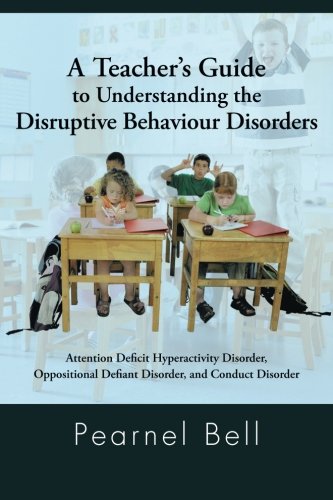
Given the potential of schools, I hope that intervention in the early grades of primary school, together with parental engagement, will be given top priority. Many of the at-risk students exhibit disruptive behavior disorders, for example ADHD (Attention Deficit Hyperactivity Disorder) from grade 1 or earlier.  The incidence of this condition has been found to be 5% in developed countries. It is therefore likely that in every average-sized primary school class in Jamaica, there would be 1 or 2 children with this condition. These children are often shouted at, or sent out of the class, and sometimes beaten. They are certainly not given the kind of attention they need in order to learn. In her book “A Teacher’s Guide to Understandingthe Disruptive Behaviour Disorders”, Dr. Pearnel Bell recommends that these children should be diagnosed, after which parents, social workers and teachers should work together to help them reach their maximum potential, and give them a sense of usefulness and belonging. Too often, they label themselves as outcasts from an early age. Any desirable behavior they exhibit should be affirmed 100 times a day (about every 5 minutes)! See my posts of August and September 2013.
     In addition to children with ADHD, there are children with undiagnosed sight and hearing problems, malnourished children and children with learning disabilities, all of whom need special consideration in a class where they can get individual attention. Currently, in many schools, children across the whole ability spectrum are put together in one class, so as not to stigmatize the children, but I question the wisdom of this.  At the end of Grade 2, assessment of such a class showed that 5 boys and 3 girls were reading below grade 1 level; 3 boys and 2 girls were at grade 1 level; 3 boys and 6 girls were at grade 2 level; no boys and 10 girls were at grade 3 level; 3 boys and 7 girls were at grade 4 level and above. The more competent readers, being better able to follow instructions and work on their own, can follow the prescribed syllabus; but the priority  for non-readers and less competent readers should surely be to start where they are and work at their pace, with a strong emphasis on social skills, preferably with a specialist teacher.  In the same way as small potholes are less expensive to fill than big ones, early intervention is less costly than late intervention, and infinitely better for the children.
     My hope is that the Ministry of Education will follow through on the projections listed above; and that they will keep the public informed of the progress, making sure the progress is given the same prominence in the press as “Prison Schools”. It is also up to us to keep them on their toes.