Showing posts with label Dr. Pearnel Bell. Show all posts

Tuesday, June 7, 2016

Launch of Ellen Pearl Outreach Children’s Charity (EPOCC)

A children’s charity with a difference was launched on Friday, May 27, 2016 at the UWI Western Campus. The Ellen Pearl Outreach will be the medium through which children in need of help can telephone a trained counsellor to talk about their problems. At the launch, its founder, Mrs. Beverley Chung spoke about its inception, and Dr. Pearnel Bell told us how it will work in Jamaica. Stakeholder groups brought greetings and children entertained with song and poetry. The keynote address was given by Juliet Holness, MP for St Andrew East Rural, graciously standing in at short notice for The Hon. Marlene Malahoo Forte Q.C., MP, who was indisposed.
     After delivering her opening remarks, Joy Crooks, Nurse Administrator at CUMI invited Rev. Lenworth N Anglin to lead us in prayer, followed by greetings from stakeholder groups.
     Mrs. Gage-Grey of the Child Development Agency (CDA) welcomed the contribution that this charity offers. 10 in every 1000 children are in need of intervention, meaning 8000 children for their population in Jamaica. The CDA is on a mission to protect children and looks out for ways of getting involved in the national conversation. We need to see each child as our own. CDA endorses EPOCC and looks forward to a meaningful partnership.
     Dr  Claudette Crawford-Brown, Lecturer in the Dept. of Social Work at UWI brought greetings from that institution, and from  Jamaica Association for Social Workers, and from other organizations she represents. After 40 years in child advocacy, she recognizes that the social status of the child is in a lot of trouble.   I wrote in my notes that 100 children were murdered in 2015. (I hope I made a mistake and that that isn’t true.) Only one child was murdered in 1993. Sexual abuse is increasing at an alarming rate. 700 children went missing. People are crying out for solutions, but the link between the micro-level and solutions is missing. This programme could pave the way to macro-level solutions.
     Mrs. Debbian Livingstone Edwards brought greetings from the Office of the Children’s Advocate, (OCA). She also welcomed the programme because children require free and ready access. There is a gap in the availability of psychosocial services, and there is a need for sustained counselling.  She reminded us that it is our civic duty to protect the rights of children.
     Greetings from FLOW/Lime Foundations was to have been brought by Mrs. Shellian O’Connor, who was unavailable because of illness, but she assured EPOCC of their commitment.
     Corinaldi Avenue Primary School choir treated us to an emotional rendition of their song; and Mount Alvernia High School’s Susanna Hyde, Child Ambassador for the OCR for Region 4, performed a poem about a boy accused of stealing. I wasn’t sure if he was guilty or not, but Susanna’s enactment made us feel his fear and sense of isolation.
      We saw Ms. Ottoa Wilson busy videotaping the launch, and were then introduced to her work – a short video about child abuse in Jamaica, and her paintings and drawings displayed around the room. 
    
  Mrs. Beverley Chung, who was born in Catadupa, St James, but left Jamaica when she was nearly 9, took us on her journey to the founding of EPOCC. She keeps in touch with Jamaica and is distressed about what is happening. She wrote a poem entitled Jamaica Weeps, Jamaica Bleeds. Inspired by a visit to Bridge of Hope Charity in Uganda, her question “Why don’t they do something?” became “Why don’t I do something?” She knew that she herself had the skills to run a charity, inherited from her grandmother, Ellen, and he mother, Pearl, who both started churches and for whom EPOCC is named. She also had experience of working with Childline in the UK.  She shared her vision with Dr. Pearnel Bell and Nurse Joy Crooks, who both said, “We need to listen to children”.  A further impetus came from Sir Patrick Allen, Governor General of Jamaica’s address to the 6th Biennial Diaspora Conference (June 2015), in which he encouraged support for community projects that would positively impact the lives of children. Hence EPOCC was born.

EPOCC’s vision is to improve the lives of children.
 Mission -Initial Aims:
  • To provide a national free 24hr helpline service manned by fully trained counsellors
  • email and Web-chat counselling service for children on any problem whatsoever
  • Register of services with appropriate referrals
 
Long-Term Aims:

  • Visit to schools, youth clubs/centres and churches to inform on abuse awareness and to empower children to say 'no' and/or to report abuse
  • Transitional opportunities and mentoring post 18 years for children that have been in care
  • Further educational opportunities for disadvantaged youths

Trustees

In the UK: Beverley Chung, Roger Panton, Jacqueline Longmore, Mrs. Cecelia Ellis (UK Treasurer), Mrs Emma Barton (Fundraiser).

In Jamaica: Joy Crooks (Secretary), Dr. Pearnel Bell, Hopeton Ridgard – Board Member for Finance; employed at JMMB; works in youth ministry.

Mrs. Chung had consultations with Esther Rantzen, who started Childline in the UK. Subsequently,

On Oct 12, 2015, EPOCC was launched in the UK.

From Oct ’15 to Jan’16, the organizational structure was worked out.

From June to September 2016, the training of volunteers will take place.

How you can help: sponsorship, advocacy, fund-raising and volunteering. Together we  can change the future of our children.

Dr. Pearnel Bell then spoke about Jamaica Childline. There was a helpline in Jamaica before, but it only lasted 7 years because of lack of support. It is needed more than  ever now with mental health problems escalating. The incidence of untreated mental health problems becomes a public health problem.
          They are actively recruiting volunteers, and 60 persons have applied so far. They will be given 40 hours of training. An international trainer will train the trainers in Jamaica. The government agencies: OCR; CDA and OCA will be present at the training.
          A SWOT analysis was performed:
Strengths – Trustees in UK and Jamaica. Aggressive fund-raising’

Weaknesses – lack of support from stakeholders; keeping in touch with stakeholders.

Opportunities – for sponsorship and to achieve.

Threats -  lack of support from stakeholders; naysayers; financial sustainability; numbers of volunteers.          

However, with 3 universities and 1 college on board, it is hoped that EPOCC will prevail.
Mrs. Juliet Holness in conversation with Dr. Pearnel Bell
 
“If we don’t stand up for our children, we stand for nothing,” said the dynamic Kimone Clarke, a social worker, in introducing The Guest Speaker, Mrs. Juliet Holness, MP for St Andrew East Rural, and wife of Prime Minister, Mr. Andrew Holness. Ms. Clarke piled on ‘special’ after ‘special’ in describing Mrs. Holness, who demonstrates in word and in deed that she stands up for children.
Keynote Address
“Children are a gift from the Lord and a blessing” quoted Mrs. Holness. She then debunked two common sayings used in relation to children.

1.     “Spare the rod and spoil the child” is often quoted as a command to beat children. However, the rod is not intended for beating. The shepherd’s rod was used to guide the sheep, not to beat them. There are other ways of punishing children, such as time-out and withholding privileges.

2.     “Children should be seen and not heard.” Children do make excessive noise sometimes, but it is our responsibility to listen to children as well as talk to them, so that we can be sure we understand each other. Body language is not sufficient engagement. They can tell right from wrong and know how to trick you.

It is our responsibility to build children’s self-esteem.

Re the internet: many people are fearful of children using the internet, rightly so as there are pitfalls. While it is useful for children to be able to do their own research, we need to pay attention to what they are doing on the internet. Children push hard against rules and norms, so parents and other adults in charge of children must give guidance to give support for positive development.
     She welcomed the launch of EPOCC, pointing out that child abuse includes emotional abuse; and that we don’t realize how many children are in need of this service. A desperate human is one with no hope. She implored us to support the work of EPOCC.
     The function closed with the presentation of an orchid to Mrs. Holness by Hopeton Ridgard; Vote of Thanks by Mrs. Janette Allen; Closing Remarks by Joy Crooks; and closing prayer by Rev. Milton Davidson.  


Monday, September 7, 2015

Dr. Pearnel Bell's Books for Children


“There was a little girl named Jay. She wanted to know the answer for everything. Her mother called her Curious Jay. Her parents taught her about feelings and many other everyday issues.” All young children are curious, but very often their questions go unanswered and their curiosity is stifled. Child psychologist, Dr. Pearnel Bell, is well aware of the effect of this on children and the assistance parents need. Thus she has written a set of books about “The Adventures of Dooney the Donkey and Curious Jay”.  They serve as a starting point for discussions with children about feelings, conflict management, understanding loss and grief, and understanding differences. With their delightful illustrations, they also add to the available picture books about Jamaican children. In addition to the Curious Jay books, she has also written "My First Book of Relaxation Techniques for Children". 

Dr. Bell launched her books on June 26, 2015 at Jackie’s Treasure, 55 Union Street, Montego Bay. The program was chaired by Joy Crooks, founder of CUMI. Her theme was ‘smart’ – we have smart phones, smart TV’s, and smart parents who will recognize the importance of Dr. Bell’s books. I brought greetings and congratulated Dr. Bell on having the perseverance  to publish these books, as I know the challenges faced by authors in self-publishing, which can sometimes be a loss-making venture. Marvette Sterling brought greetings from the Child Development Agency.
Joy Crooks, chairperson

A cultural item in the form of a puppet show followed. Teachers, who had taken part in a workshop earlier in the day, used glove puppets to dramatize the story of Dooley the Donkey and Curious Jay – appreciating one’s own abilities and the differences between people.
The Guest Speaker was Dr. Claudette Crawford-Brown,  a clinical social worker and child welfare consultant. As an academic for over thirty years, her innovative direct intervention strategies have led to landmark publications on Caribbean children, adolescents and families. She congratulated the teachers on their puppet show which they had put together that very afternoon in her workshop, commenting that in a US University she would have to pay actors for the role play. Dr. Crawford-Brown emphasized the importance of story-telling and the way in which it transmits values in Caribbean societies, which are under assault from ‘smart’ technologies.  She will be doing more workshops in the future using Dr. Bell’s books. She explained that the problems adults have originate in childhood, and that guidance counsellors and therapists can use these books with children to heal and repair. Furthermore, they add to the diversity in the limited range of picture books about Jamaican children.
Dr. Pearnel Bell, author
The keynote address was followed by the author’s response, after she was introduced by Mrs. Shona Heron.  At the end of the program, refreshments were served and Dr. Bell signed copies of her books. Some members of the audience made generous donations of sets of books to schools. Parents, who are already hard-pressed from having to buy so many school books, are unlikely to buy these books because of the high price (US $21.99 on Amazon) necessitated by high cost of self-publishing and distribution. I hope sponsorship will be found to make them available to the guidance counsellors of all primary schools in Jamaica.

I myself purchased The Adventures of Dooney the Donkey with Curious Jay: Understanding Conflict  Management   on Kindle for $5.99. Below is the review I wrote for it:
New approaches to conflict management are desperately needed in Jamaica, where, instead of themselves trying to find the source of a conflict, parents often advise children to hit back. The Adventures of Dooney the Donkey with Curious Jay: Understanding Conflict  Management is a useful starting point for discussion between parents and children about conflict management. The concepts such as ‘conflict’ and ‘identifying problems’ which are hard for children to understand are explained by the example of the conflict between Dooney the Donkey and Ramos the Goat. The advantages of resolving conflicts without resorting to physical means are discussed. This book could be read by a good reader of grades 2 and up on his own, but would be far more worthwhile if discussed with a parent or teacher. Children could be encouraged to identify their own sources of conflict, keep a journal and write their own stories. There is no mention of feelings, which must come into play and should also be discussed. Dr. Bell deals with feelings in The Adventures of Dooney the Donkey with Curious Jay: Understanding Feelings.

Another of Dr. Bell's books which should be available to teachers in all primary schools is

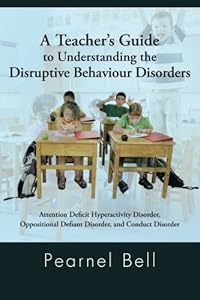
A Teacher's Guide to Understanding the Disruptive Behaviour Disorders : Attention Deficit Hyperactivity Disorder, Oppositional Defiant Disorder, and Conduct Disorder. You can  read my review of this book in my blog of Sep 2, 2013. All Dr. Bell's books can be purchased at Jackie's Treasure, 55 Union Street, Montego Bay, as well as on Amazon.


Monday, September 2, 2013

Review of Dr. Pearnel Bell's book


In an interview with Dr. Pearnel Bell on Attention Deficit Hyperactivity Disorder, which I posted on January 22, 2012, she informed me that she had written a book on the behaviour disorders, which would soon be available in books stores in the USA. A Teacher's Guide to Understanding the Disruptive Behaviour Disorders: Attention Deficit Hyperactivity Disorder, Oppositional Defiance Disorder, and Conduct Disorder is now available in Jamaica. Copies were on sale at Dr. Bell’s book launch on Friday, August 23. 
    The information in this book made a profound impression on me. Since reading it, certain ideas have played over in my mind. One of my passions is that all children should learn to read. I volunteered at Chetwood Memorial Primary School, one afternoon a week to help Grade 2 children who had not yet learnt to read. Mrs. Amoy Virgo also helped the same children on another afternoon. A student from Montego Bay Community College helped in the 2011-12 school year. He motivated the students, and they liked him. I had hoped to involve more volunteers, especially students at the tertiary level, but this was not to be. Perhaps there was a reason. I had concentrated on the teaching of reading instead of focusing on the children.
    Mrs. Virgo and I were faced with a real problem when it came to discipline. Several of the children couldn’t concentrate for more than about five minutes – they crawled around under the desk to pick up things they’d dropped on the floor, they liked to slide on the ceramic tiles in the library, they were distracted by every little thing and made frequent requests to go to the bathroom. It is possible that they had a disruptive behaviour disorder. The better behaved children in the groups were distracted by them. I tried to use positive reinforcement, but I have to admit that from time to time, I raised my voice and glared at them. One student may have suffered from Oppositional Defiance Disorder, as he point-blank refused to do as he was told.
    Dr. Bell’s book indicates to me that I should have taken an entirely different approach. Ideally, the children would have been referred to a psychologist, who would work with teachers, parents and social workers to modify the children’s behaviour. Given the large numbers of children in relation to the numbers of psychologists and social workers, the second-best is for the teachers (including myself) to have a better understanding of the disorders, and reward desirable behavior instead of punishing undesirable behavior.   
    The book does not prescribe a simple remedy to the problems confronting teachers when they have children with disruptive behaviour disorders in their classes. Rather, it identifies the direction in which teachers should look to find their own solutions to these problems. Dr. Bell begins by defining the disorders and discusses teachers’ knowledge and perceptions of, and experience and attitudes towards them. She recommends that teachers read more about these behaviour disorders and provides and extensive list of references.
Dr. Pearnel Bell
        In her second chapter, she draws on her own research into Jamaican teachers’ knowledge, experience and attitudes. When confronted with a child with a disruptive behaviour disorder, many teachers will reprimand, shout, give the child a cold stare, or even beat the child. When these strategies are ineffective, teachers are overcome with feelings of frustration.  They may send that child to the Guidance Counselor, or Principal, or send the child out of the class. Not only are these strategies ineffective, they have actually been shown to make matters worse. In her third chapter, she discusses in a balanced way the use of medication as a treatment option.
    Chapter 4: “Strategies Teachers Can Use to Deal with ADHD, ODD and CD Students”  is probably the one which many teachers and administrators will find the most helpful. The usefulness of the ecosystem approach, involving psychologists, teachers, social workers and parents is explained. The shortage of trained personnel in Jamaica hinders widespread use of this strategy. However, much can be done by administrators to train teachers and encourage teamwork among teachers and parents. The importance of teachers giving positive reinforcement for good behaviour cannot be overemphasized. “Experts are unanimous in supporting the use of praise and positive reinforcement as a powerful tool for reducing problem behaviour and improving academic performance.”
    The final chapter “Self Care: Stress Management for Life Management” is an often overlooked aspect of training for teachers. Throughout the book, Dr. Bell makes reference to how disruptive students make teachers feel, and therefore react, and the effect of the teachers’ reaction on these students. Chapter 5 includes stress reduction tips and emphasizes the importance of self-reflection and self-monitoring.
     I strongly recommend this book to all teachers and school administrators. A copy should be available in every school and teachers’ training college. Since it is based on workshop content, it could also be the basis for workshops within a school or college. Chapter 4 ends with questions for discussion among workshop participants. I regret that it was not possible for Dr. Bell to include samples of responses to these questions. We look forward to further publications of this nature by Dr. Bell.
    There is evidence that children with untreated disruptive behaviour disorders often find themselves on the wrong side of the law. What if all of these children could be treated, or at least given positive reinforcement for desirable behaviour by their teachers? Perhaps we would see a reduction in the crime rate, hence a reduction in the cost of crime. The money saved could be used to employ more psychiatrists and social workers. 


Monday, August 26, 2013

Dr. Pearnel Bell’s Book Launch

Teachers, family, friends and well-wishers gathered in Room 21, UWI, Western Campus on Friday, August 23, 2013 for the launch of Dr.Pearnel Bell’s book, “A Teacher’s Guide to Understanding the Disruptive Behaviour Disorders – Attention Deficit Hyperactivity Disorder (ADHD), Oppositional Defiance Disorder (ODD), and Conduct Disorder”. The publication of this book is a testament to Dr. Bell’s determination and dedication. She made time to write in spite of her busy schedule of work as a Clinical Psychologist, Regional Consultant with the Ministry of Health, University Lecturer and Researcher. It is described by Dr. Daniel Eckstein as timely. I wish I’d had the information in this book years ago, and therefore describe it as long overdue. However, the book could not have been written sooner, as it contains up-to-date information, much of the research into these disorders having been carried out in the 21st century.
Joy Crooks


Chairperson for the launch, Joy Crooks, Nurse Administrator of CUMI (Committee for the Upliftment of the Mentally Ill), extended a warm welcome to us and introduced Dr. Luz Longsworth, Director of the University of the West Indies Western Campus, who brought greetings. Dr. Claudette Crawford-Brown, Lecturer in Sociology, Psychology and Social Work in the Faculty of Social Sciences at UWI, and Director of the Child and Adolescent Academy of Jamaica also brought greetings. The need for training and networking of all practitioners in the field of mental health is being addressed by this academy, and Dr. Bell’s book contains important reference material to be used by the academy. Dr. Crawford-Brown taught Dr. Bell, whom she named among the top ten students she has ever taught. Dr. Crawford-Brown is the author of “Children in the Line of Fire”.
There followed a Cultural Item “Gimme Dumpling” entertainingly and confidently performed by a little girl from Montego Bay Infant School.
Kay Osborne giving the Keynote Address

The keynote address was given by Kay Osborne of Kay Osborne and Associates, whom we remember as having taken over the reins at TVJ at a critical time. She had read Dr. Bell’s book from cover to cover and highlighted some salient points. She surmised that it was love that drove Dr. Bell to write this most important book, a great achievement in a country where people love to talk but not act. Many of the problems in Jamaica, including crime and violence, stem from mental health problems. Teachers are not usually aware of contributing to harming a child, and could instead help the child if they knew how.  Even small interventions can be helpful, including encouraging the class to applaud good behavior in a disruptive child. Parents sometimes abandon children with problems to the teacher, but a child can be helped best when teachers, parents, social workers and psychologists work together.
Dr. Bell made her response after an introduction by Mrs. Shona Herron, who claimed that Dr. Bell lives what she teaches, and is a social worker at heart, finding great joy when she is able to diagnose and treat. She is a graduate of UWI, received her doctorate at Nova South Eastern  University and her post-doctoral work was at Walden University. Previously, she was a teacher at St. James High School for many years.

Dr. Bell herself confessed that teaching was her first love. It was in schools that she found that teachers lacked the knowledge of disruptive behavior disorders, and what to do when confronted by them in the classroom.  

Books on sale.
Dr. Bell signing a copy of her book

If you are a teacher, I strongly recommend you to buy this book, or ask your principal to buy it for your school. If you’re not a teacher, please encourage all the teachers you know to get hold of a copy and read it.

Next week: a review of the book.