The Yellow Poui is one of Jamaica’s beautiful flowering
trees, but its yellow blossom lasts only one or two days. I have long puzzled
over how all the Poui trees in Montego Bay synchronize their flowering. They
normally flower in March or April, at the end of the usual dry season. There’s
a saying that if students haven’t started studying for exams when the Yellow
Pouis flower, they are cutting things too close. This would normally hold true, but this year
and last Pouis have flowered again in August and September. In the worst
drought in decades, they have been leafless for months. Then after some heavy
showers over the weekend, they burst into flower on Thursday, so I presume that
was the trigger. The pollinators of the flowers, insects and tiny hummingbirds,
feast on nectar. The fruits, long pods, grow quickly, then dry and open
releasing wind-dispersed, papery-winged seeds. They spring up all over the
place, but their survival rate is low. Most of the Poui trees we see are
planted for decorative purposes.
Join Helen Williams (pen-name Billy Elm) children’s author, in conversations on literacy, children's books and the joy of reading.
Sunday, September 6, 2015
Sunday, May 31, 2015
Bad Girls in School - A Book Review
"Bad Girls in School" by Gwyneth Harold is a title in Heinemann's Caribbean Writers Series, first published in 2007. It is available on amazon and in local bookshops in Jamaica.
Badly behaved students are the bane of teachers’ lives. They sap our energy, demand a disproportionate amount of attention, and make life miserable for other students. We try to make our classes interesting and relevant, we stress the importance of grasping content in the reaching the goal of getting good grades, and the importance of good grades to future success. The school builds up a reputation. Most of the students conform to the norms and take pride in doing so. Various techniques and punishments from reprimands to detentions to suspension are employed to bring the wayward into line. In spite of this, there are always some who are influenced by neither the carrot not the stick. The ultimate sanction for them is expulsion.
This appears to be the fate of the “BadGirls in School” by Gwyneth Harold, in the opening chapter of this book.
However, they are rescued by the chairman of the school board, Canon Rodney
Pryce, and the young librarian, Elaine Mico. The school sets up a special
one-year program for the rehabilitation of the girls. This was one aspect of the story which I found to be implausible - no school has the resources for a teacher to be assigned to a group of three students, even if on a part-time basis and the teacher is the librarian. The story, set in
Redeemer College, a fictional girls’ day school in Kingston, Jamaica describes
the girls’ progress from the viewpoint of each of the girls, allowing us to
hear their thoughts in a blend of English and Jamaican Creole, and learn about
their home backgrounds and challenges. Sections are also written in the voice
of Elaine, who volunteered to teach them and has her own challenges.
As a retired teacher, I found this
approach interesting. The author allows us to hear the girls’ most intimate
thoughts – their anger, resentment, frustration, hopes and dreams – some of
which they don’t even share with their friends, let alone their teachers. While
teachers are under pressure to complete syllabuses, set and grade assignments,
keep records and make sure that students pass external examinations with flying
colours, they hardly have time to listen to students’ problems. Even if they
did, few are qualified as counselors or would be able take the kind of action
for which psychologists and social workers are needed. However, a teacher could
speculate that the badly behaved student in her class has similar thoughts to
those of the girls in this book, and perhaps treat her differently. However, this very readable book is really intended for teenage girls. Some, who are themselves ‘bad girls’, would hopefully come to the
realization that their situations are not unique, and that it is never too late
to make amends. Good girls will also be drawn into the story and may identify some the the girls they know in these fictional characters.
One thing I didn’t like about “Bad
Girls in School” was the cover illustrating three girls, none of whom is
pretty, as one of them is described in the story. It shows nothing of the
setting – nothing which made me think I would like to read the book. In fact it
had the opposite effect.
Thursday, May 14, 2015
Read Across Jamaica
![]() |
| Book display at St. James Parish Library |
“Share a book with a child and you
have given illiteracy a dose of cure.”
![]() |
| Ms. Ja'nice Wisdom |
Initially, she modelled the Read Across Jamaica
concept after the NEA’s Read Across America Day initiative, otherwise known for
celebrating the March 2 birthday of children's book author Dr. Seuss (Ted
Gieselle) with a strong emphasis on the universal appeal of “Cat in the Hat.”
However, this year she focused on Jamaican authors. Working in collaboration
with the Book Industry Association of Jamaica (BIAJ) 10 copies of each of 50
titles of books by Jamaican authors were purchased and distributed to 10 schools
and/or libraries. A big 'thank you' to Kellie Magnus for emailing authors, compiling the list, liaising with Ja'nice, and coordinating the collection and handing over of the books. Authors of these books were on hand to read from them
at selected locations, during Education Week.
Following a church service in
Trelawny on Sunday, May 3, Ms. Wisdom presented the Minister of Education, The
Honourable Ronald Thwaites with a copy of
“Oh, The Places You'll Go!” by Dr. Seuss,
to kick-off their Island Wide Bus Tour which began on Monday, May 4 and ended on Saturday May 9.
The schools visited were:
Portsmouth Primary, St. Catherine; Mustard Seed Community–Little Angel’s
Learning Center, Kingston; Hope Valley Experimental, Papine, St. Andrew; St.
Benedicts Primary, Kingston; Port Royal Primary, Kingston; Harbour View Primary,
Kingston; Sankofa Primary, St. Thomas; McIntosh Memorial Primary in Manchester;
Siloah Primary and Appleton Basic Schools in St. Elizabeth; and finally St.
James Parish Library, where I was privileged to be invited to take part in the
activities.
She started the program by playing the song ‘Education is the Key’ by TashaT.
“Education
is the key to success, Education is the way of survival,
Without education you will be declined in
this modern time.
“Education
is the key to success, Education is the way of survival,
Education is the means of sharpening the mind,
in this modern time.”
Children then sang along, moved to the beat,
played tambourines and hit an exercise ball with drum sticks. After this
ice-breaker, Ms. Wisdom talked about juggling different aspects of your life –
self, family and friends. She illustrated this by juggling balls. As in life,
if you drop them, someone will help you retrieve them.
She then read from “Oh, The Places You'll Go!” by Dr. Seuss, picking up two main
themes. One tied in with juggling aspects of your life with its ups and downs. The
other illustrated the way in which books can allow you to travel the world
without leaving your home.
In keeping with this year’s decision to highlight Jamaican children’s
authors, I was then given the opportunity to read from “Delroy in the Marog
Kingdom”. Starting with two boys acting
the parts of Delroy and Mario putting the frog in a pot, and involving all the
children in aspects of the story, I hope I have encouraged them to read the
book, copies of which are available in the library.
![]() |
| With Ja'nice and staff from the library |
After my reading there were more activities for the children.
Ms. Wisdom and the library staff assisted them in making wordless book
bracelets. Then Ms. Wisdom displayed her artistic talents in painting the faces
of the participants, one child at a time, meanwhile the others were supplied
with paper and crayons for their own art work.
I applaud Ms. Wisdom for her vision, her generosity, her
leadership skills and her energizing of the week’s activities for over 12 years
in Jamaica. Read Across Jamaica Foundation Inc. is certainly an organization
well-worth supporting.
CONTRIBUTE: Donate@ReadAcrossJamaica.com;
BOOK DRIVE: https://www.indiegogo.com/projects/read-across-jamaica-2015
CONTRIBUTE: Donate@ReadAcrossJamaica.com;
BOOK DRIVE: https://www.indiegogo.com/projects/read-across-jamaica-2015
Books by Jamaican Authors distributed by Read Across Jamaica
Foundation
Little Lion Goes to School by Kellie Magnus
| |
Little Lion at Bat by
| |
Little Lion Goes for Gold by Kellie Magnus
| |
Nancy and Grandy Nanny by Rebecca Tortello
| |
Gammon and the Woman's Tongue Trees by Diane Browne
| |
Every Little Thing Will be All Right by Diane Browne
| |
Island Princess in Brooklyn by Diane Browne
| |
Ash the Flash by Hazel Campbell
|
|
Miss Bettina's House by Hazel Campbell
|
|
Bernie and the Captain's Ghost by Hazel Campbell
| |
Freedom Come by Jean Goulbourne
|
|
Jo-Jo's Treasure Hunt by Cherrell Shelly-Robinson
|
|
Jenny and the General by Jean D'Costa
|
|
Little Island, Big Adventure by Maria Roberts Squires
|
|
Forest Fever by Sharon James
| |
Bolo the Monkey by Jonathan Burke
| |
Irie Morning by Alison Moss-Solomon
| |
All Over Again by A-Dziko Simba Gegele
|
|
Ptolemy Turtle by Melisande Potter Hall
|
|
Soon Come by Melisande Potter Hall
| |
Lucille Travels at Christmas by Jasmine N'Toume
|
|
Kito in the Kitchen by Radha Poorhan
| |
When the Sun and the Moon Ran Away by Maizle Goulbourne
|
|
Dale's Mango Tree by Kim Robinson
| |
Beautiful Blue Shirt on Barry Street by Isabel Marvin
| |
Saving Joe Louis by Isabel Marvin
|
|
Naughty Eddie Larue by Julia Wohlt
|
|
Suck Finger Pickney by Tracey McNair
|
|
The Adventures of Lumi & Twizzy by Gina Harvey Lewis
|
|
Fly Away Home by Andy Mead
| |
Project Climate Save by Petre Williams-Raynor
|
|
Tilly Bummie by Hazel Campbell
| |
Anancy's African Adventures by Beulah Richmond
|
|
Anancy & Friends by Beulah Richmond
|
|
Drog: A Dreggen Story by Hazel Campbell
| |
Juicebox & Scandal Bag by Hazel Campbell
|
|
Lally Mae's Farm Suss by Melanie Schwapp
|
|
A Boy Named Neville by Linda Gambrill
|
|
Miss Tiny by Linda Gambrill
|
|
Croaking Johnny and Dizzy Lizzy by Linda Gambrill
|
|
Marcus Garvey by Suzanne Francis Brown
|
|
Searching for Pirates: A Port Royal Adventure by Suzanne Francis Brown
| |
Young Heroes of the Caribbean by Gwyneth Harold
|
|
The Turtle Tale by Latoya Newman
|
|
Children of Hopeful Village by Latoya Newman
|
|
Aiden and the Apple Tree by Johnathon Kelly
|
|
Prayers for School Days by Carolien Aikman
| |
Delroy in the Marog Kingdom by Billy Elm
|
|
Errol’s Taxi by Helen Williams
|
|
Little Meeta by Jean Goulbourne
| |
Mystery of the Golden Table by Suzanne Francis Brown
| |
Blue Mountain Trouble by Martin Mordecai
|
Sunday, May 3, 2015
Reading from Delroy in the Marog Kingdom and Beautiful Blackbird
The Montessori School in Montego
Bay invited me to do a book reading on April 23, 2015. Since some of the
children there are only 3 years old, I decided to read a book more suited to
that age group than Delroy in the Marog Kingdom, which I read to the older
children.
I chose Beautiful Blackbird by Ashley Bryan which lends itself to actions in which the children can take part.
I wrote out the story on 5” x 3”
cards, so that one of the children could hold up the book for the others to see
the delightful pictures. It also enabled me to maintain eye-contact with the
children and show them the actions. These included a flap-flap-flapping of
their wings, beak to beak – peck, peck, peck and a dance called the show claws
slide. I had a feather handy to ‘paint’ the birds with spots, large and small,
and stripes close together and far apart.I chose Beautiful Blackbird by Ashley Bryan which lends itself to actions in which the children can take part.
There are several possible follow-up
activities to this reading. Younger children can be given birds cut out of different coloured cartridge paper
to paint with dots and stripes, and paste on to a larger picture. If the larger
picture includes a lake, they could match the birds with their mirror images.
Older children can draw birds and cut out their shapes. Children can be
involved in a discussion about what is on the outside not being an indication
of what is on the inside.
![]() |
| Crab Catcher at Treasure Beach |
![]() |
| Hummingbird at a feeder |
The topic also lends itself to a
discussion on respect for wild life, and whether it is wrong to kill birds with
a sling-shot and steal eggs from nests.
| Preparing to put the frog in the pot Reading from Delroy in the Marog Kingdom at the Montessori School |
Tuesday, April 28, 2015
Ridiculous Math Questions
![]() |
| Mona Reservoir, Kingston, Jamaica |
# 1. The distance around a circular
swimming pool is 4.42 km. How far is the outer wall from the centre of the
pool?
The answer works out to be 704
metres. The distance across the pool
would be 1408 metres – approximately 5 times the distance between the groynes
at Doctor’s Cave Beach. Suppose the pool is 1 m deep, (a safe depth since anyone getting into
difficulties would otherwise drown before a life-guard could reach them), the
volume of water in the pool would be 3.14 x 704 x 704 = 1,556,234 cubic metres = approx. 1,556 million litres or 411 million US gallons. At NWC rates, this
pool would cost Ja $554,641,797.60 to fill. This is a reservoir, not a swimming
pool! This distance around the Mona Reservoir is only 2.74 km!
What is the point of this
ridiculous question? For children to demonstrate that they can do complicated
long division sums, calculate the radius of a circle when given the
circumference, and remember to (and how to) convert kilometres to metres?
![]() |
| Lucea Courthouse with German clock in the tower. |
#5. A circular clock in the town
square is 125 m in diameter. How far is the outer edge of the clock from its
centre?
My questions: What would be the
weight of this clock and the mechanism used to make it work? How big is the
town square? Is the clock upright or flat on the ground? If it was upright it
would be about a third the height of the Empire State Building and at its
widest point would fill about half a city block. How far away from it would you
have to be to be able to read it? If it was flat on the ground, it couldn’t fit
into a space the size of the National Stadium in Kingston, Jamaica. What would
be the use of such a clock, anyway? By way of comparison, the dials on Big Ben,
one of the biggest clocks in the world, are 7 metres in diameter.
The purpose of this ridiculous
question is for children to demonstrate that they know that the radius of a
circle is half the diameter and that they can divide 125 by 2. Surely there
must be a more sensible way for children to do so. Why not asks a question about
the clock in Lucea town square? This book claims to have an integrated approach,
why not include some interesting history too? The clock, in the shape of a helmet
worn by the German Royal Guard, was intended to be a gift from the people of
Germany to the people of St. Lucia. By mistake it was sent to Lucea, Jamaica
which had ordered a smaller clock from the same company. The people loved the clock and raised the extra money to pay
for it. The clock was installed in the tower in 1817.
Writers of math text books and
teachers, please write sensible problems with realistic measurements that
children can relate to, and that can show how math is used in everyday life.
These ridiculous questions must surely alienate students who already have a
negative attitude towards math.
Saturday, April 4, 2015
Children's Books from or about Africa
This is the first of a series of posts I am writing for persons who would like to purchase multicultural books for Jamaican children, and would appreciate suggestions about what is available and appropriate. I hope that this list will also be useful for teachers, librarians, book distributers and corporate donors. This post has 20 books from and about Africa. I have been somewhat arbitrary in my selection, mainly from the website of Africa Access Review. One post cannot cover this vast continent, so there will be a part 2 at some point.
The first 10 books on
the list are for younger children (aged 4-7), but not for them to read on their
own, because of the level of vocabulary, the sentence structure and the
concepts. They are, however, ideal for reading aloud and for discussion.
1. Ais for Africa by Ifeoma Onyefulu (Puffin Books 1997) – good information about Nigeria, suitable for Jamaican Basic Schools. Ifeoma
Onyefulu has written many more beautifully illustrated books for this age
group.
2. The Magic Gourd by Baba Wague Diakite (Scholastic 2003) - a folktale from Mali about kindness and
generosity. Good for reading aloud to 4 – 7 year-olds.
3. A Gift from Childhood by Baba Wague Diakite (Groundwood Books 2010) - a story
about traditional village life in Mali.
4. KenteColors by Debbi Chocolate (Walker Children’s 1997) - about the traditional kente cloth of the
Ashante people of Ghana
6. Catch That Goat by
Polly Alakija (Barefoot Books 2002) – set in Nigeria, a goat gets away and runs
through the town’s market. Grade 1 children should be able to read this simple
story on their own. Younger children could tell the story from the
illustrations.
7. Babu’s Song by Stephanie Stuve-Bodeen (Lee and Low Books 2003) – with the help of
Babu, his mute grandfather, Bernard is able to go to school.
8. Muktar and the Camels
by Janet Graber (Henry Holt and Co 2009) – living in an orphanage on the border
of Somalia and Kenya, Muktar remembers the time when he lived with his family
and the camels. This book would also be of interest to older
children who could read it for themselves.
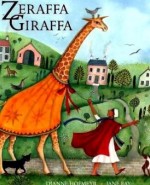
9. Zeraffa Giraffa by
Quarto Generic (Frances Lincoln Children’s Books 2014) – the amazing true story of Zeraffa, a giraffe who was sent as a
gift by the Ottoman Viceroy of Egypt to King Charles X of France in 1826.
10. Circle Unbroken by
Margo Theis Raven (Square Fish 2007) – the story of how the art of
basket-making was taken from Africa to the Carolinas. Is there a similar story
of the way in which the art of basket-making was brought to Jamaica?
1. Sundiata:Lion King of Mali by David Wisniewski. (HMH Books for Young Readers; 1999) In the thirteenth century, Sundiata overcame physical
handicaps, social disgrace, and strong opposition to rule the West African
trading empire of Mali. A good book for teachers to read aloud to grades
2 & 3 children, and for older children to read on their own.
2. The Other Side of Truth by Beverley Naidoo (Harper Trophy 2002) – 2
children are smuggled out of Nigeria when their mother is killed in political
unrest. The difficulties they face as refugees in London. This story won a Carnegie Medal UK and many
other awards.
3. Nelson Mandela The Long Walk to Freedom by Chris Van Wyk
and Nelson Mandela (Macmillan 2009) – an abridged version of Nelson Mandela’s
autobiography.
4. The No.1 Car Spotter by
Atinuke (Kane
Miller Book Pub; June 2011) –
No 1 is bright, plucky and resourceful – a fantastic character for Atinuke’s
new series.
5. How the Leopard got his Claws by
Chinua Achebe (Candlewick Press 2011) –
a fable about the dangers of power taken by force.
6. The Boy Who Harnessed the Wind
by William Kamkwamba (Dial Books for Young Readers 2012) - the true story of how this author, as a teenager, built a functional windmill from junkyard scraps in Malawi.
7. Pharoah’s Boat by David Weitzman (Houghton Mifflin Books for Children
2009) - the story
of how one of the greatest boats of ancient Egypt came to be built.
8. Seeds of Change –
Planting a Path to Peace by Jen Johnson (Lee
and Low Books 2010) - tree planting movement in Kenya spearheaded by Wangari
Maathai and other women, and opposed by government and multinationals.
9. Bintou’s Braids by Sylviane Diouf (Chronicle Books
2001)– a young girl in West Africa is in a hurry to grow up, but she learns
that she must earn her braids.
10. Mystery of MeerkatHill by Alexander McCall Smith (Anchor
2013) – one of several children’s detective stories, about Precious Ramotswe,
set in Botswana.
Subscribe to:
Posts (Atom)